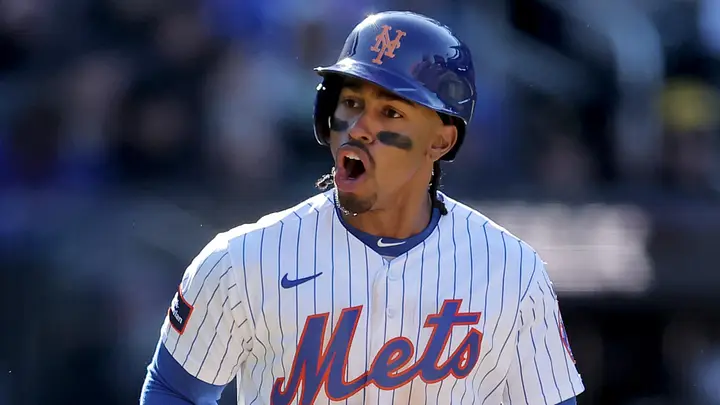
New York Mets star shortstop Francisco Lindor is reportedly expected to be dealt during the offseason rather than before this year’s trade deadline, according to a new report.
The Mets have struggled throughout the season and sit at 41-58, last in the National League East, leaving them effectively out of the playoff race. As a result, the organization could look to move several veteran players before the trade deadline. Lindor, widely regarded as one of baseball’s premier shortstops over the past decade, would undoubtedly attract significant interest if the Mets made him available.
However, USA Today’s Bob Nightengale reports that a trade involving Lindor is considered more likely to happen this winter than before the current trade deadline, citing several factors behind that expectation.

Francisco Lindor More Likely to Be Moved in Winter
With a full no-trade clause and with over $160 million owed on his contract over the next five years, Nightengale believes that a trade deadline move may prove to be too complicated for Lindor ahead of the August 3 trade deadline, and therefore, an offseason move is more likely.
“Rival executives believe that the Mets will trade shortstop Francisco Lindor this winter – not at the trade deadline. He’s owed $160 million over the next five years after this season, and has a full no-trade clause, complicating a deal by Aug. 3,” Nightengale wrote.
Any team acquiring Lindor would have to cough up some prospects for him, not to mention taking on a lot of money on their books going forward to acquire him. So while he would certainly be an upgrade at shortstop for many teams, the Mets may have to wait until this offseason to move him.
Francisco Lindor Having a Down Year
Francisco Lindor has been regarded as one of Major League Baseball’s elite shortstops since making his debut in 2015, but the veteran has endured a difficult 2026 campaign amid the Mets’ disappointing season.
Through the first half of the year, Lindor is hitting just .205 with a .639 OPS and a 78 OPS+, meaning his offensive production has been 22% below the league average. He has also managed only five home runs and 12 RBIs while battling multiple injuries. His 0.3 bWAR puts him on track for the least productive season of his major league career.
Now 32 years old and playing one of baseball’s most physically demanding positions, Lindor’s struggles have raised questions about whether he may be entering the decline phase of an otherwise outstanding career.
With the Mets well out of postseason contention, the organization could decide that this is the right time to transition to a younger option at shortstop. However, moving Lindor would be far from simple. His sizable contract may require New York to absorb part of the remaining salary to facilitate a deal, and his full no-trade clause gives him complete control over any potential destination.
Because of those challenges—and with little time remaining before the trade deadline—the offseason may provide a more realistic opportunity for the Mets and Lindor to evaluate trade possibilities if both sides decide a fresh start is the best path forward.